Where electric fencing earns its place
An electric fence works by teaching stock to keep away from it, so it can be lighter than a fence that has to stop them by strength. Around Orange it is mostly used four ways: as an offset wire to protect an older fence, as low-cost internal subdivision, across creeks and flood-prone flats where heavy fences get wrecked, and as exclusion fencing against feral pigs.
That last use has a local example. A Local Land Services case study from south of Bathurst describes a group of landholders who added electric exclusion fencing to baiting, trapping and shooting in their feral pig program. One landholder in the accompanying video said tens of kilometres had been built on his property and estimated it stopped well over half of the pig traffic (Local Land Services case study). That is one landholder's estimate, not a trial result, but it shows what contractors in this region are being asked for.
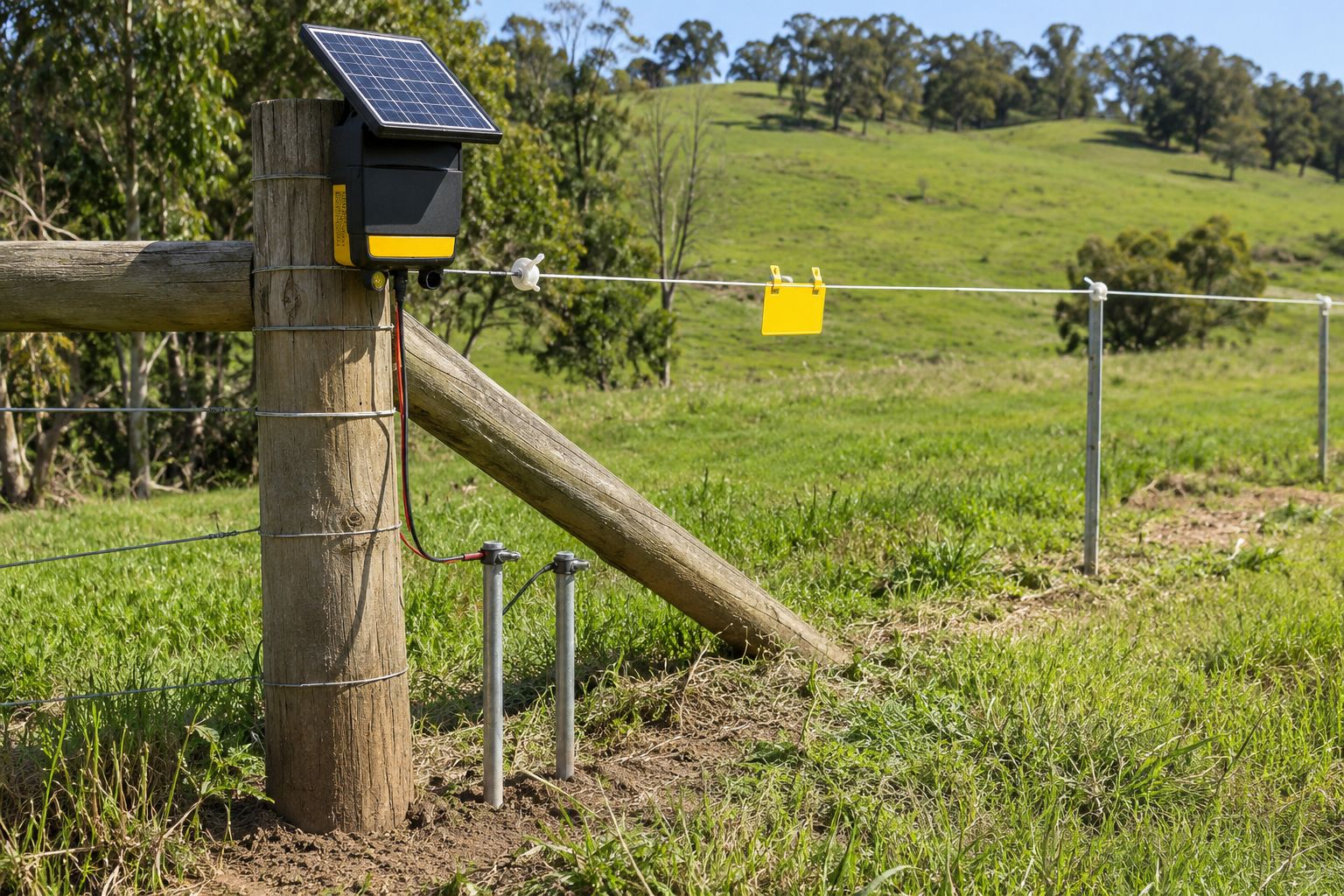
The parts of the system
| Part | What it does | What to ask the contractor |
|---|---|---|
| Energiser | Sends short pulses down the fence. Mains units suit fences near a shed. Solar and battery units suit back paddocks. | How it was sized for the length of fence and the growth that will touch it |
| Earth system | Returns the pulse through the ground. A poor earth is a common reason for a weak fence. | How many earth stakes, where, and how it performs when the ground is dry or frozen |
| Conductors | Plain wire for permanent fences. Tape, braid or poly wire for horses and temporary breaks. | Wire type and how joins are made |
| Insulators and offsets | Hold the live wire off posts and off an existing fence. | Whether they suit timber, steel or both, and how far out the offset stands |
| Switches and floodgates | Let you isolate a section, and shut off a creek crossing when it floods. | Where the cut-out switches go |
Energisers are covered by Australian and New Zealand standards. Ask the contractor which standard their installation meets and how it is labelled. The NSW planning guidance for exempt rural fences also sets a condition for electric fences, so the approvals guide is worth a look before you sign.
Cold, wet and dry: earthing on tablelands soils
Earthing is where local conditions bite. The Orange station averages 924 mm of rain and a mean July minimum of 1.6 degrees (Bureau of Meteorology), so a fence here can be working through saturated ground, frozen topsoil and a dry late summer in the one twelve months. Ask the contractor how the earth is designed for both ends of that range, and whether an earth return wire on the fence is worth adding for dry spells.
Growth is the other load. Spring grass, blackberry and briar touching a live wire bleed power all along the line. An energiser sized for a clean fence in winter may be too small in November. Ask what happens to the voltage when the fence line is not sprayed or slashed.
Creeks and flood-prone flats
Victorian Government guidance for riparian fences in flood-prone areas, an interstate source, says electric fences are often the best choice on flood-prone ground because a few wires catch less debris than netting, and it recommends a cut-out switch so an electrified floodgate can be isolated when the water is up (Victorian riparian fencing guidance). The same guidance warns that electric fences need a reliable power supply and regular checks for shorts. They are low cost to build, not low attention.
Powerlines and safe work
Fence lines and powerlines often share a road frontage. The regional electricity network operator's farm safety guidance says to stay at least 8 m from a powerline and anything touching it, and sets clearances for machinery (network operator safety guidance). Ask the contractor who arranges powerline and underground service checks before posts go in, and never run an electric fence wire parallel to and directly under a powerline without advice.
Getting it quoted
Tell the contractor the length, what stock or pest the fence is for, where the nearest mains power is and whether the line floods. Send it through the quote form. For an offset on an existing fence, a photo of the old fence helps them judge whether it is worth protecting or better replaced, in which case stock fencing is the page to read.
What an electric fence cannot do
An electric fence cannot hold stock that have never been trained to it, and it does nothing when the power is off, the earth is poor or the wire is shorted by growth. It is not a substitute for a physical barrier on a road frontage where a failure puts stock among traffic. This page cannot size an energiser for you or say which standard applies to a particular unit. The contractor and the manufacturer's instructions do that.
Check the current rules before you rely on this
This page describes how electric fencing is used on farms around Orange and what public sources say about flood-prone ground, powerline clearances and pig exclusion. It describes the rules in general terms as they stood in November 2026. Standards, forms, thresholds and fines change.
The authoritative sources are Local Land Services case study, targeting feral pigs across boundaries (south of Bathurst), Victorian Government, guidelines for riparian fencing in flood-prone areas (2015; Victorian guidance, interstate), Bureau of Meteorology, Orange Agricultural Institute climate statistics (station 063254), Electricity network operator, electricity and agriculture safety guide (PDF) and NSW Planning, fences (exempt and complying development). Where anything here differs from those sources, they are right and we are not.
We are not fencing contractors, builders, regulators or lawyers. For what applies to your fence, ask the contractor which licence or registration they hold for your job, then ask NSW Fair Trading or Building Commission NSW if you are unsure, and ask the council that covers the land.
Accurate at the time of writing, November 2026. Always check the source before relying on it.