First, in this order
When a flood or fire takes out a fence, do four things before any wire is cut: make stock safe, photograph the damage, tell your insurer, and tell the neighbour if it is a boundary. Rebuilding comes after those, and the order matters because clean-up destroys the evidence that insurers and assistance programs ask for.
| Step | What to do | Why it matters |
|---|---|---|
| 1. Stock | Move stock to a secure paddock or yards. If animals can reach a road, deal with that first. | Owners are responsible for keeping stock off public roads. |
| 2. Photos | Photograph every damaged section before debris is cleared, with something for scale, and note the date. | Insurers and disaster programs usually want proof of what the event did. |
| 3. Insurer | Check whether fencing is covered and whether they need to inspect before repairs. | Policies differ on whether and how fencing is covered. |
| 4. Neighbour | Tell the adjoining owner and agree what is urgent. | A shared fence is usually a shared cost, and surprises cause disputes. |
| 5. Quote | Get the repair or rebuild quoted in writing, with temporary works shown separately. | You may need the quote for a claim or an application. |
NSW Police say stock owners have a responsibility to make sure their animals do not stray onto a public road (NSW Police). A hot wire or a few panels as a stopgap is often worth paying for while the real job is quoted.
This district knows floods
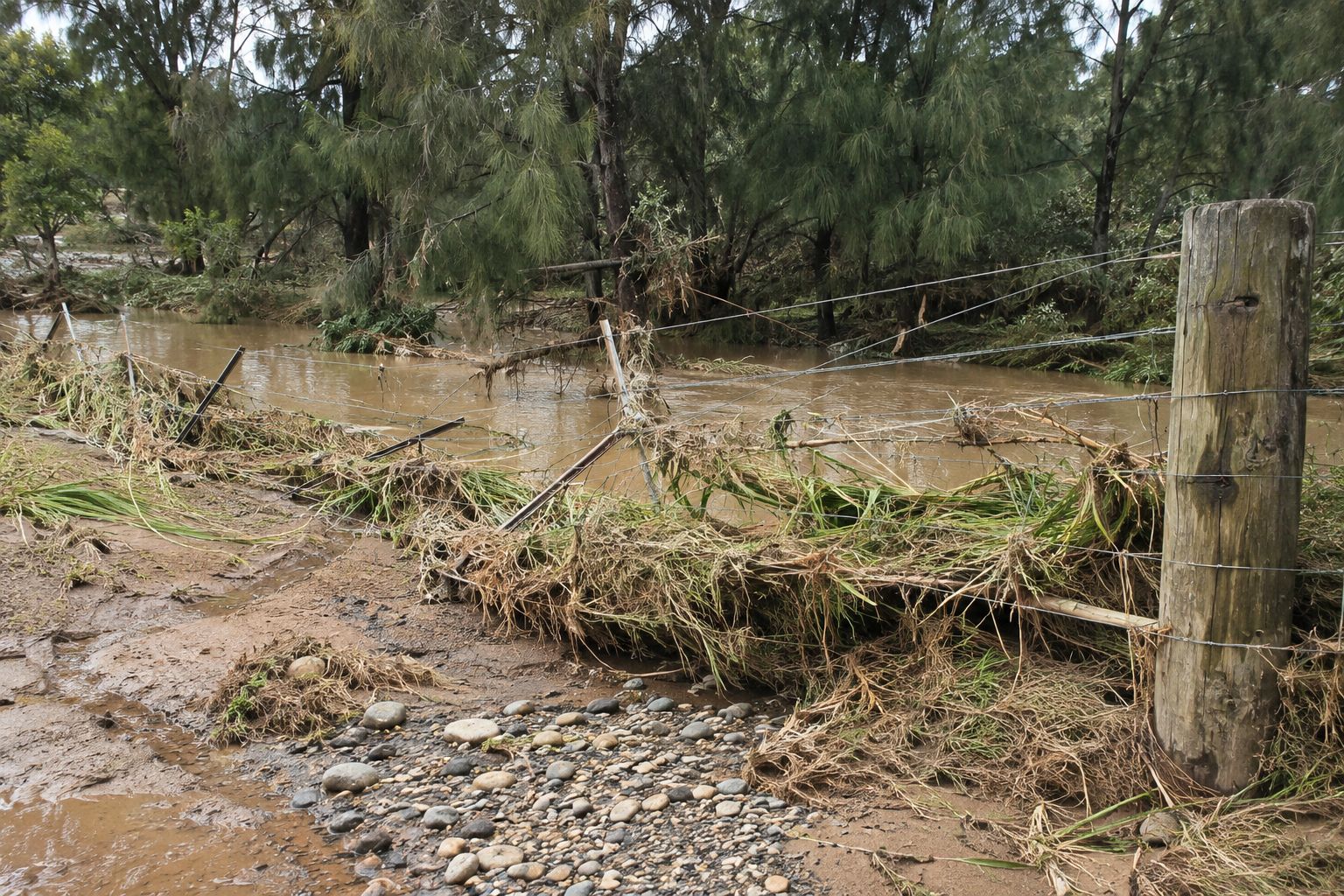
The creeks and rivers west of Orange can rise fast. Cabonne Council's recovery pages describe Eugowra as devastated by the November 2022 flood, and name Molong, Canowindra and Eugowra as its priority towns for temporary flood barriers (Cabonne Council). Fences on farms along those waterways face the same water. If your place is on one of those systems, a like for like rebuild is the wrong starting point.
Rebuilding a flood fence differently
No fence survives a major flood. Victorian Government guidance for riparian fences in flood-prone areas, an interstate source, says so plainly, and then lists ways to lose less next time (Victorian riparian fencing guidance):
- Run the fence as close to parallel with the flow as the paddock allows, so water slides along it.
- Prefer plain wire over netting and barbed wire where water crosses, because it sheds debris and is easier to clean and strain up again.
- Keep strainer assemblies independent, so a wrecked section does not pull down the run beside it.
- Use floodgates or drop-down sections at waterway crossings, and put gates on higher ground.
- Keep the fence only as high as the stock need.
A Landcare group in western NSW has also described a boundary fence that swings with floodwater and settles back afterwards, though its write-up gives no measurements (Landcare NSW). Ask the contractor which of these ideas suit your crossing and what each adds to the quote. The electric fencing page covers why a few hot wires are often used on flood flats.
After a fire
Fire leaves a different mess. Timber posts burn off at the ground or char through, steel posts can lose their strength and their coating, and wire that has been heated is brittle and will not hold tension. A fence that still looks upright can be finished. Contractors usually test the wire, replace burnt strainers and work out from there whether the run is worth saving.
Two practical points. First, burnt trees along the line keep dropping limbs for a long time afterwards, so ask the contractor how they will deal with dangerous trees before anyone works under them. Second, welding, grinding and slashing can start fires. The NSW Rural Fire Service says a fire permit is free, needs notice, and is required for burning during the Bush Fire Danger Period, which usually runs from 1 October to 31 March but can vary (NSW Rural Fire Service). Check the current fire danger rules for your area before any hot work on a fence line.
Who pays on a boundary
The Dividing Fences Act 1991, in the version we found, has a provision for urgent work on a dividing fence that has been damaged or destroyed, under which the other owner can be asked for half. Legal Aid NSW warns that if the work is later found not to have been urgent, the owner who went ahead may lose the right to a contribution (Legal Aid NSW). How the Act treats flood and fire in particular is not something we could confirm, so talk to the neighbour first and read the dividing fences guide.
Help with the cost
Disaster assistance in NSW follows declared events. After the 2022 floods the NSW Government ran a fence rebuilding program through Local Land Services that funded volunteer groups to rebuild flood-damaged farm fences. It is closed (NSW Government). Whether anything is open for your event is a question for the Rural Assistance Authority and Local Land Services. The assistance guide explains how to check.
To get the repair quoted, send the location, what happened and when, and photos through the quote form.
What a repair cannot fix
A repair cannot make a fence floodproof or fireproof, and no contractor should promise that. It cannot restore heat-damaged wire or posts that have rotted or burnt below the ground. This page cannot tell you whether your insurer will pay, whether an assistance program is open or what your neighbour owes. And if the creek has moved or scoured a new channel, the old line may simply be the wrong place for a fence now.
Check the current rules before you rely on this
This page describes first steps after flood or fire damage to a rural fence and what public sources say about rebuilding on flood-prone ground. It describes the rules in general terms as they stood in November 2026. Standards, forms, thresholds and fines change.
The authoritative sources are Victorian Government, guidelines for riparian fencing in flood-prone areas (2015; Victorian guidance, interstate), Cabonne Council, flood recovery information and support, NSW Rural Fire Service, fire permits information for rural landholders and farmers (PDF), Legal Aid NSW, fences, boundaries and retaining walls FAQs, NSW Government, Fence Rebuilding Program extension round (closed; historic) and NSW Police, straying stock on public roads. Where anything here differs from those sources, they are right and we are not.
We are not fencing contractors, builders, regulators or lawyers. For what applies to your fence, ask the contractor, your insurer, the Rural Assistance Authority and Local Land Services, and check current fire danger rules with the NSW Rural Fire Service.
Accurate at the time of writing, November 2026. Always check the source before relying on it.